

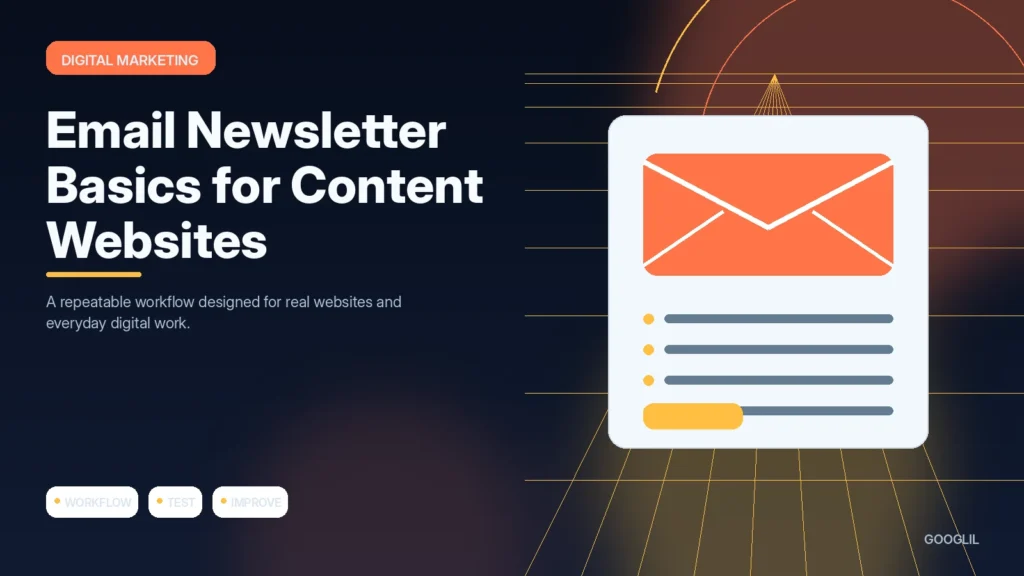
A newsletter gives a content website a direct relationship with readers, but that relationship depends on permission and useful expectations. A simple signup promise and consistent editorial value matter more than sending frequently.
1. Offer a clear reason to subscribe
Explain what subscribers will receive, how often you normally send it and why it is different from simply revisiting the website. A specific promise such as practical updates or curated guides is stronger than a generic “join our newsletter” message.
2. Use a simple form
Ask only for information you actually need, usually an email address and optionally a first name. Keep consent wording clear, show validation errors near the field, and test the confirmation and unsubscribe flow on mobile as well as desktop.
3. Send consistent useful emails
Choose a cadence you can maintain and make each email useful even if the reader does not click. Lead with one clear idea or resource, keep promotional content proportionate, and avoid sending merely because a calendar date arrived.
4. Track clicks and unsubscribes
Review delivery, click behaviour, replies and unsubscribe trends to learn which topics and formats are useful. Do not optimise only for opens because privacy protections can make open-rate data unreliable; look for downstream actions and reader feedback as well.
Set expectations at signup
Explain what subscribers will receive and roughly how often. Collect only the information you need, store consent appropriately, provide a working unsubscribe option and avoid purchased lists. Plan emails around useful content or updates rather than forcing a promotion into every send. Track delivery, clicks, replies and unsubscribes to understand whether the list is healthy.
A simple editorial newsletter format
A weekly or fortnightly email can include one short editor note, two useful recent articles and one practical tip. That is easier to sustain than a complex template and gives readers a clear reason to open it.
Practical example
A content website can start with a simple welcome sequence instead of a complicated automation map. The first message confirms what the subscriber will receive, the next sends one genuinely useful guide, and later messages keep a predictable cadence. Use clear sender identity, an easy unsubscribe path and a reason for each email. A smaller list that expects and values the messages is more useful than a large list collected without clear consent.
Build a newsletter readers expect and recognise
A content-site newsletter should make its value clear before asking for an email address. Explain what subscribers will receive, roughly how often it arrives and who is sending it. Collect permission transparently and avoid turning a download into an excuse for unrelated daily promotions. Trust begins with matching the promise made on the signup form.
Start with a small sequence: a welcome message, one strong resource and a regular editorial email with a predictable structure. Use a recognisable sender name, accessible formatting and a clear unsubscribe link. Segment only when it changes what the reader receives; complicated tagging adds little value if every subscriber gets the same message anyway.
- Write subject lines that describe the real value rather than relying on misleading urgency.
- Test important links and mobile rendering before sending to the full list.
- Remove or suppress persistently invalid addresses to protect deliverability.
- Keep promotional relationships and affiliate links clearly disclosed when they appear.
Track replies, useful clicks, conversions and unsubscribe trends in addition to opens. Privacy changes make open rate imperfect, so use it as one directional signal rather than the definition of newsletter success.
What to avoid when working on an email newsletter
- Buying email lists.
- Sending without permission.
- Overloading every email with offers.
Quick checklist for an email newsletter
- Offer a clear reason to subscribe.
- Use a simple form.
- Send consistent useful emails.
- Track clicks and unsubscribes.
Build a newsletter readers expect and recognise
A content-site newsletter should make its value clear before asking for an email address. Explain what subscribers will receive, roughly how often it arrives and who is sending it. Collect permission transparently and avoid turning a download into an excuse for unrelated daily promotions. Trust begins with matching the promise made on the signup form.
Start with a small sequence: a welcome message, one strong resource and a regular editorial email with a predictable structure. Use a recognisable sender name, accessible formatting and a clear unsubscribe link. Segment only when it changes what the reader receives; complicated tagging adds little value if every subscriber gets the same message anyway.
- Write subject lines that describe the real value rather than relying on misleading urgency.
- Test important links and mobile rendering before sending to the full list.
- Remove or suppress persistently invalid addresses to protect deliverability.
- Keep promotional relationships and affiliate links clearly disclosed when they appear.
Track replies, useful clicks, conversions and unsubscribe trends in addition to opens. Privacy changes make open rate imperfect, so use it as one directional signal rather than the definition of newsletter success.
Frequently asked questions
How often should I send a newsletter?
Choose a schedule you can maintain with useful content. Consistency is more important than a high frequency.
Should I use double opt-in?
It can improve consent quality and list hygiene, and may be appropriate depending on your audience, platform and legal requirements.
What should I do with inactive subscribers?
Run a re-engagement or preference check and consider suppressing long-term inactive addresses rather than sending indefinitely.
Keep Learning
Continue with these related guides: